An exploration of nature, time, loss, and renewal through painting, mixed media, and printmaking.
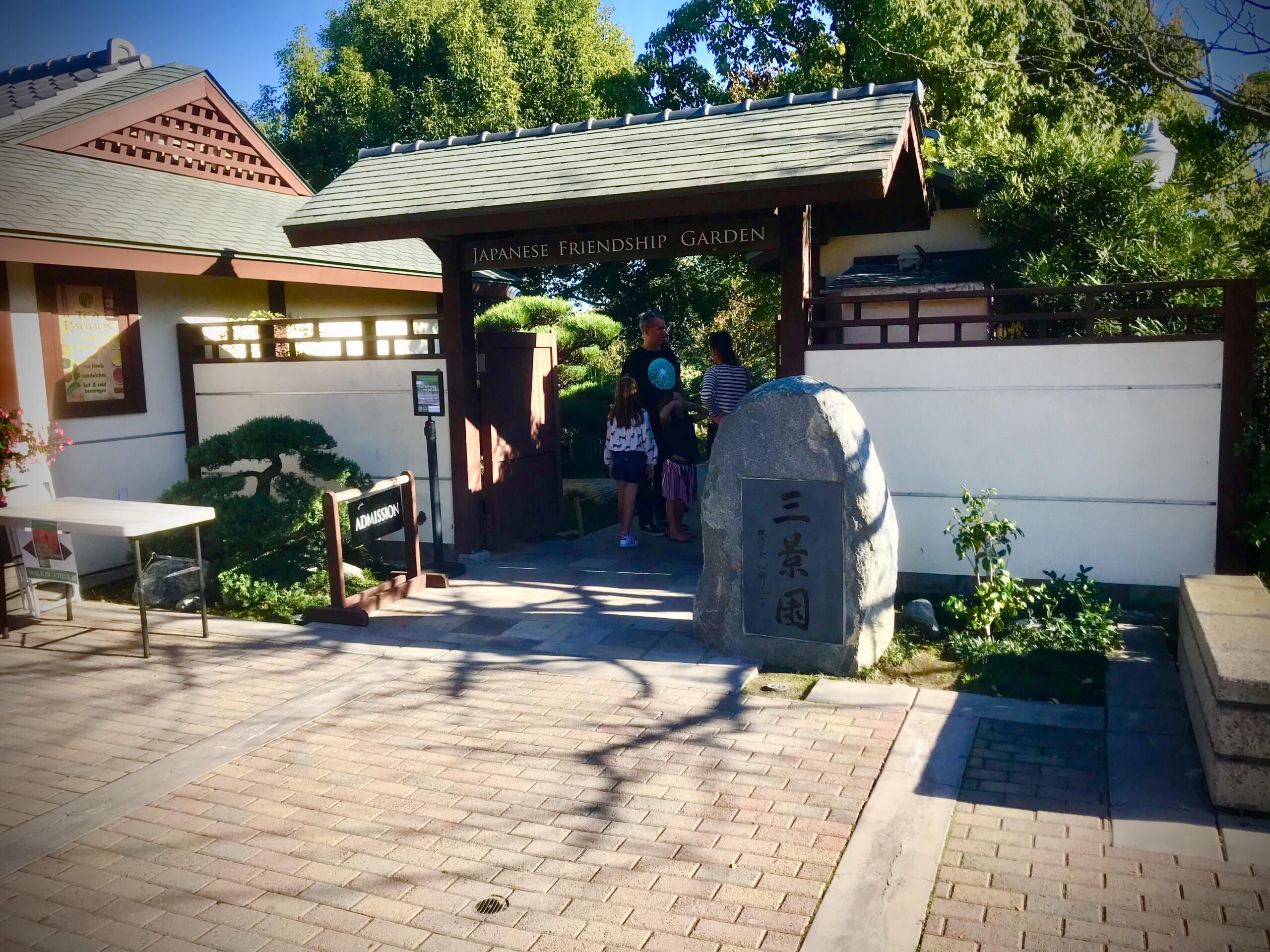
It has been quite some time since I last exhibited at the Japanese Friendship Garden & Museum in San Diego. Much has happened since then, most tragically the loss of my wife, Nancy, to cancer after 40 years of marriage.

What held me together during that time was making art.
Everyone grieves in their own way. For me, creating art became a way of navigating loss and finding meaning in a world that had profoundly changed. I wasn’t interested in making “pretty pictures.” I needed to be authentic. I found myself painting landscapes at night, searching for something beyond appearances, something that could express what I was experiencing.
When the opportunity arose to exhibit again at the Japanese Friendship Garden, it felt like the right moment to return to bonsai as a subject for my artwork. In many ways, bonsai became a phoenix rising from the ashes of grief—an expression of recovery, renewal, and the enduring beauty of life.
Looking Back at My First Exhibition
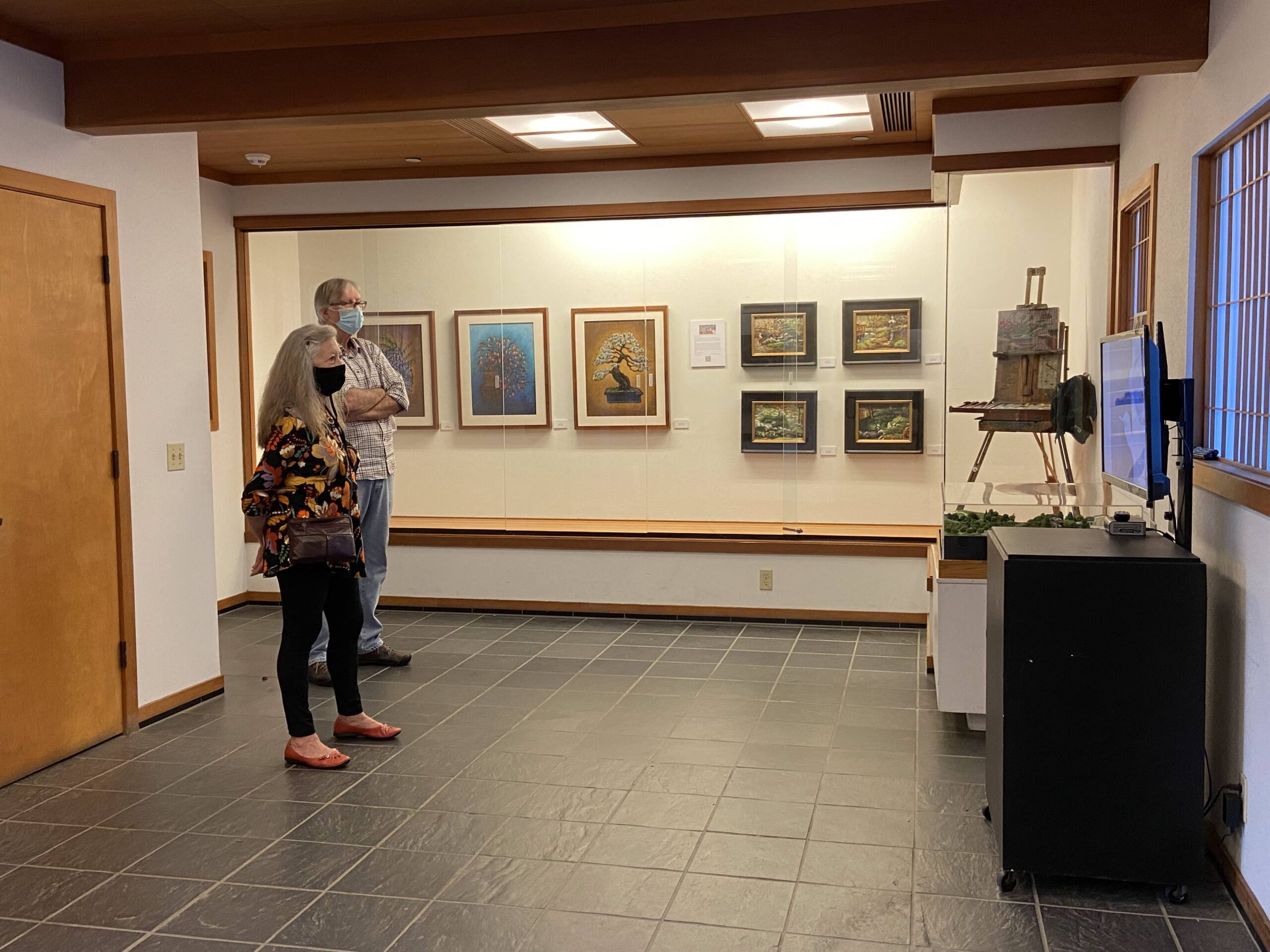
My first exhibition at the Japanese Friendship Garden was the culmination of many years of involvement in the bonsai community. I had spent years studying the living art of bonsai under excellent teachers in California, along with an intensive period of study in Japan.
What first attracted me to bonsai was its aesthetic beauty. Having spent a lifetime drawing and painting, I found that drawing bonsai was a way to better understand its structure, movement, and visual relationships. Bonsai is, after all, a living art form, shaped through an ongoing dialogue between nature and human intention.

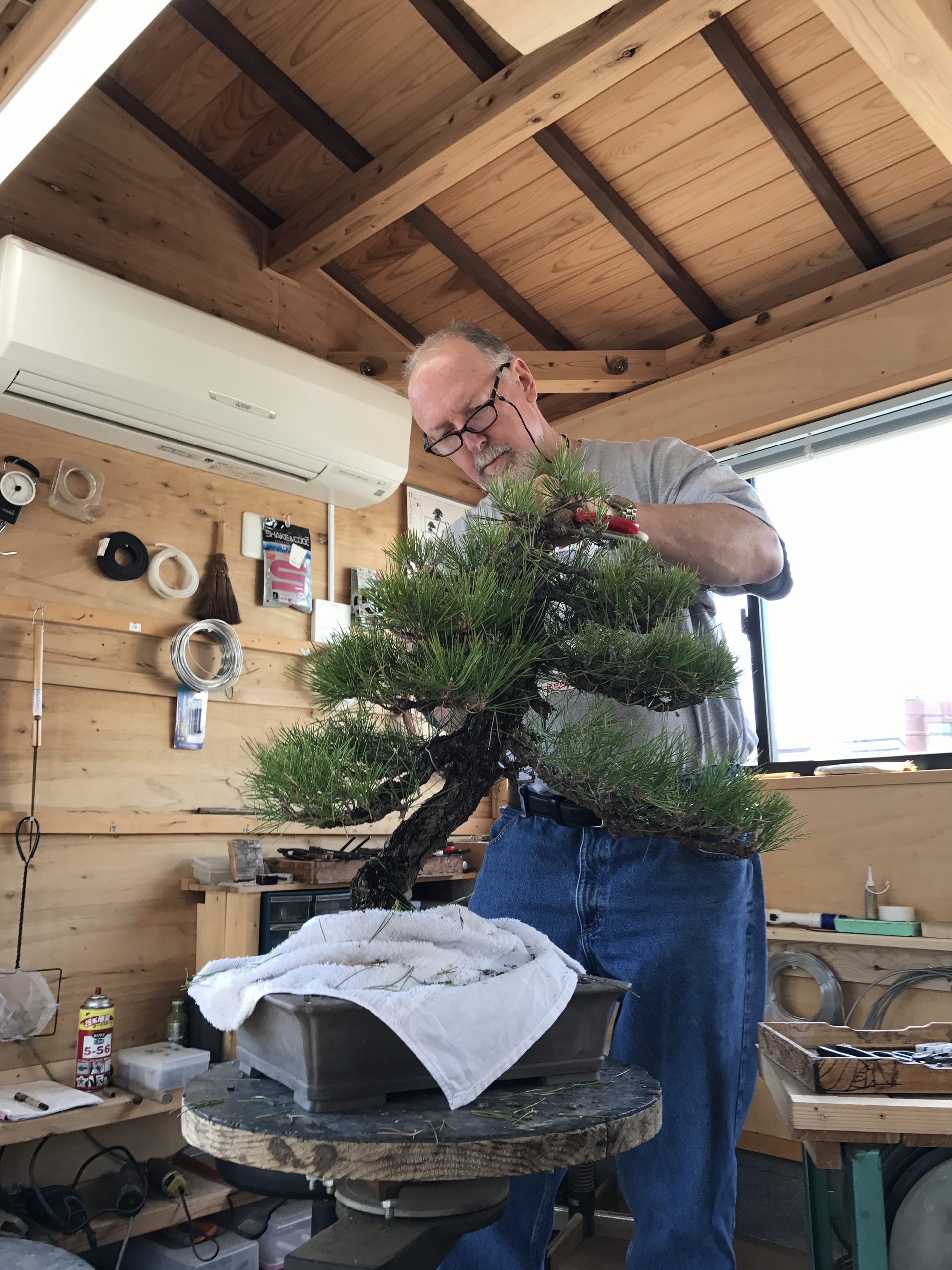
That first exhibition gave me an opportunity to share my bonsai etchings, Japanese-inspired landscapes, and drawings of the Japanese Friendship Garden itself.
It was also a homecoming of sorts. I grew up in San Diego but had been living in the Huntington Beach area for many years. Seeing old friends, meeting fellow bonsai enthusiasts, and sharing my artwork made the exhibition particularly meaningful.
Sharing art with others has always been one of the most rewarding parts of exhibiting. Studying the living art of bonsai has also profoundly influenced how I approach drawing, painting, and printmaking.
Bonsai Reimagined: A New Exploration
This new exhibition focuses predominantly on bonsai as subject matter, but my approach has evolved considerably.
I wanted to create artwork that expresses the wear and tear of time, the beauty of imperfection, and the relationship between traditional Japanese aesthetics and contemporary artistic expression.
Three Approaches to Artmaking
Oil Painting
Large-scale oil paintings on linen.
Mixed Media
Mixed media paintings on paper, mounted on panels.
Printmaking
Woodblock relief prints and unique monoprints incorporating gelli printing, stencil work, and hand-painted acrylics.
Each approach allows me to explore bonsai from a different perspective, from the monumental presence of a mature tree to the intimate details of line, texture, and color.
I’ve also documented much of this creative exploration through instructional videos on my YouTube channel, along with reels and artwork on Instagram and articles on my website blog. These provide a behind-the-scenes look at the ideas, techniques, and occasional surprises that have shaped the work.
Mixed Media: Discovering Beauty Through Experimentation
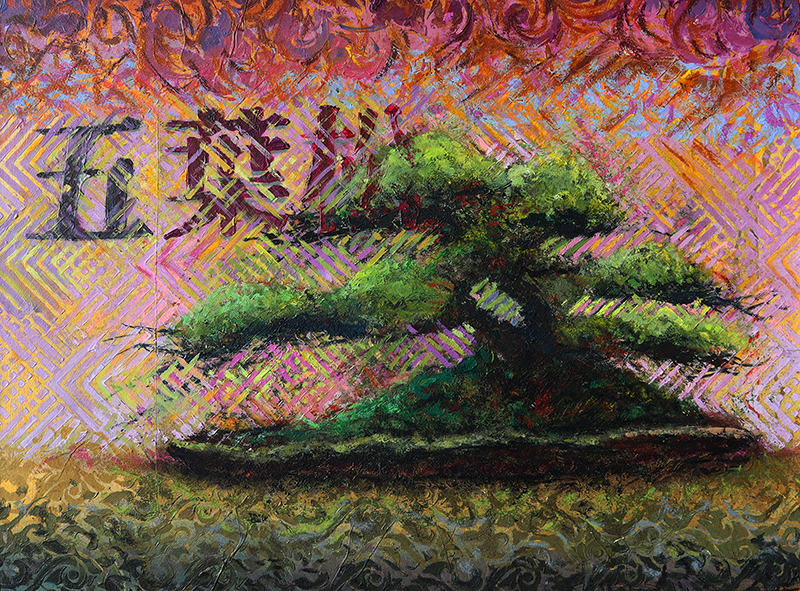
I began this series with the idea of placing bonsai within an ambiguous, expressive space, allowing the tree to interact with an environment that is not entirely representational.
Drawing upon my experience in drawing, painting, and printmaking, I developed a process that encourages experimentation and discovery. Unlike a more formal approach to painting, this method allows unexpected relationships to emerge. Sometimes the most interesting results come from things I could never have planned.
Through energetic backgrounds, layered textures, and complementary colors, I sought to heighten the visual presence of the bonsai itself.
Throughout the process, I remained mindful of Japanese aesthetic principles, particularly the triangular composition often found in bonsai design, which conveys stability, age, and stature. I was also guided by wabi-sabi, the appreciation of simplicity, imperfection, and the beauty that comes with age.
For the medium-sized mixed media works, I incorporated marbled paper, allowing its patterns and colors to influence the developing composition. In the smaller pieces, I drew inspiration from Sanzo Wada’s remarkable book of color combinations.
These choices helped create a dialogue between the tree and its surroundings. The backgrounds become active participants in the composition, sometimes challenging the tree, sometimes supporting it, but always contributing to the overall visual experience.
Woodblocks and Monoprints: Tradition Meets Experimentation
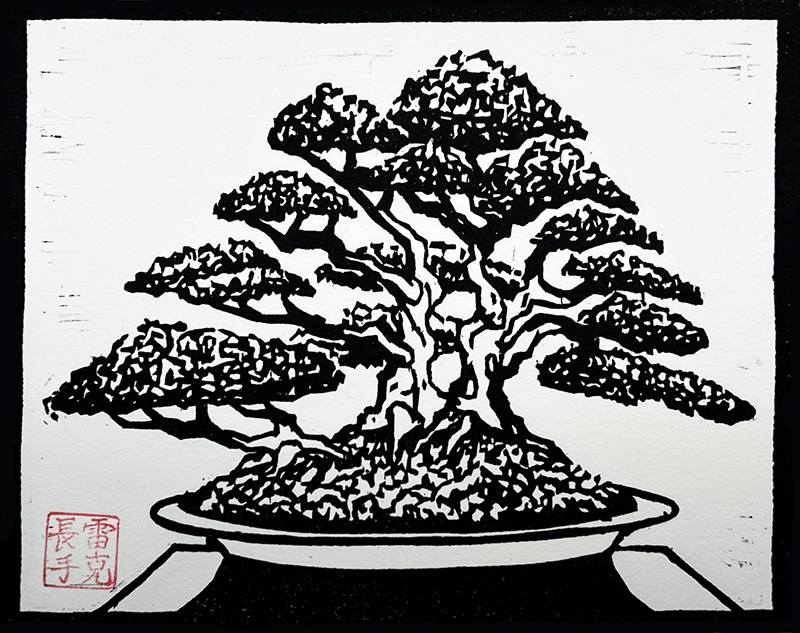
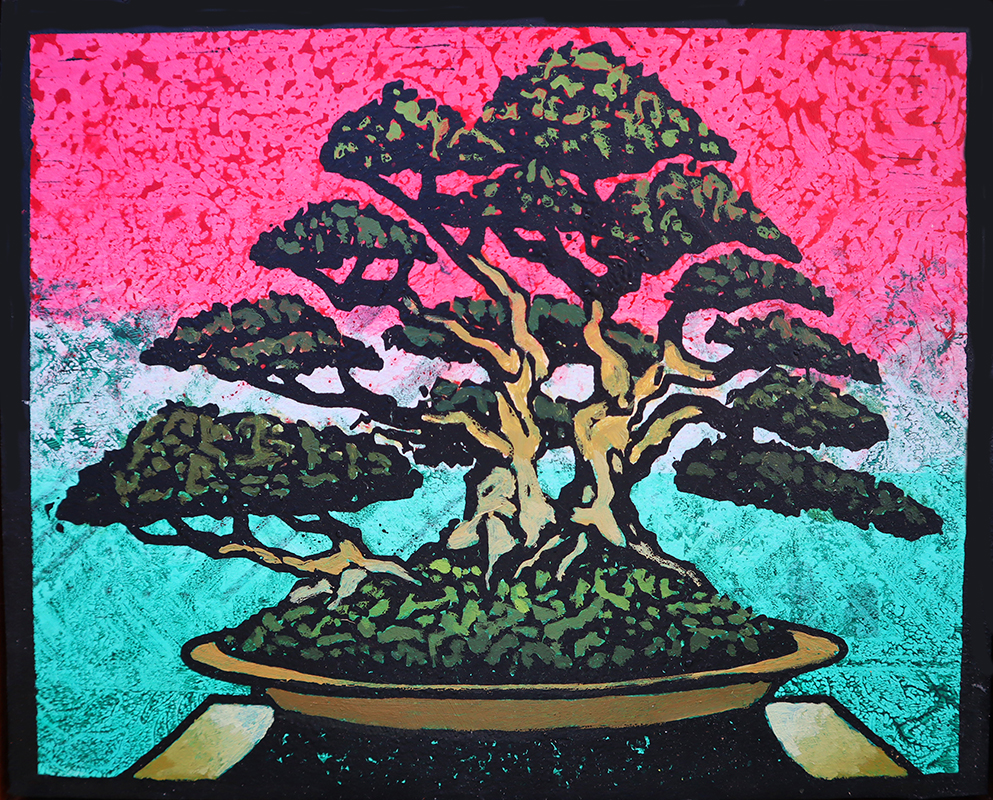
Woodblock printing has a long and distinguished history in Japan, particularly through the tradition of ukiyo-e. My own woodblock practice draws more directly from Western relief-printing techniques, but I wanted to bring these approaches into conversation with Japanese subject matter and design.
The challenge was both technical and aesthetic, and it became a wonderful opportunity for learning and artistic development.
I was particularly inspired by the beautiful patterns found in Japanese folding screens, textiles, and kimono designs. Using stencils, I incorporated organic and geometric patterns into backgrounds created through gelli printing.
The carved woodblock provides a strong, graphic image of the bonsai, while each individually developed background introduces a different atmosphere and relationship of color and form.
Once again, Sanzo Wada’s color combinations became an important resource, helping me establish harmony and balance within compositions that might otherwise seem chaotic.
What I particularly enjoy about these monoprints is that each is unique. Although they begin with the same carved image, the resulting artworks develop their own personalities through color, texture, and unexpected discoveries.
Oil Paintings: The Monumental Presence of Bonsai
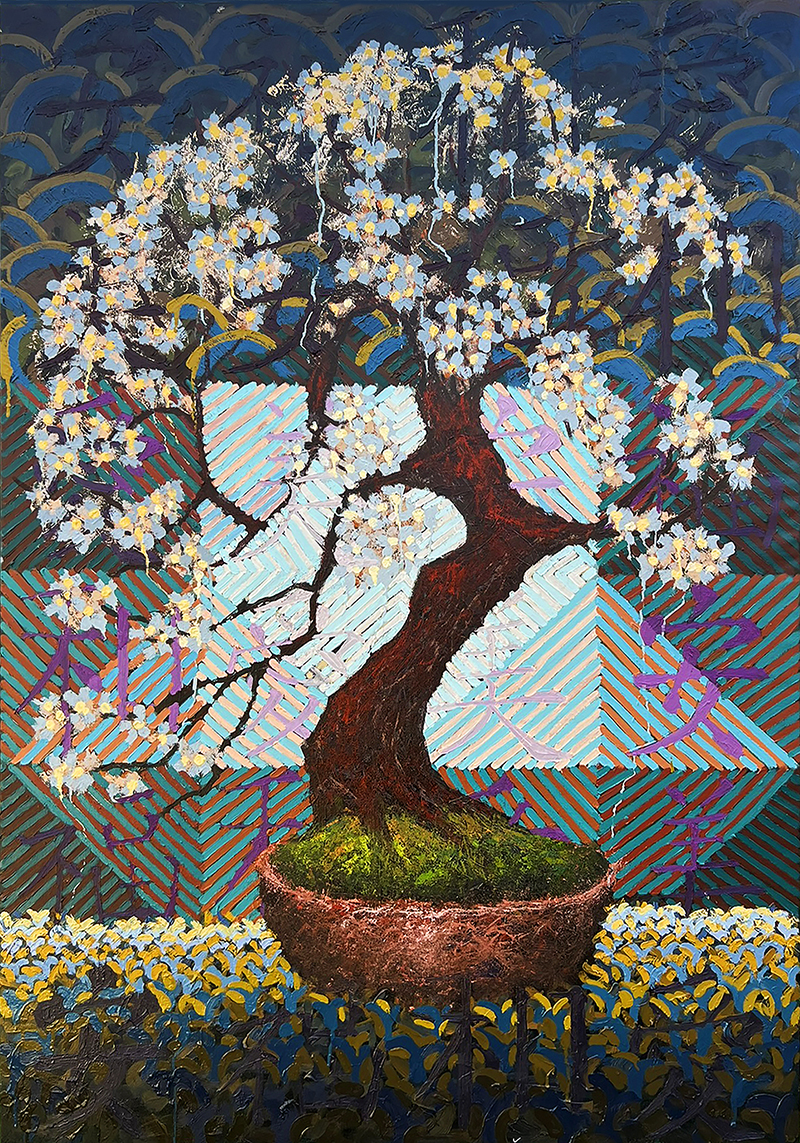
With the large oil paintings, my intention was to monumentalize bonsai as a subject worthy of contemplation.
Bonsai are often relatively small in physical scale, yet they can suggest the grandeur and endurance of ancient trees growing in nature. By painting them at a much larger scale, I wanted to amplify that presence and invite viewers to experience the tree as something powerful, enduring, and deeply expressive.
Within these paintings, I incorporated kanji representing love, harmony, happiness, tranquility, and beauty—ideas that resonate with both Japanese aesthetics and my own experience of life.
The trees emerge from expressive backgrounds of color, pattern, and movement. These environments are not simply decorative; they suggest the forces of nature, the passage of time, and the complexities of existence.
In some ways, I see my own life reflected in these compositions.
The tree stands boldly within its environment, shaped by forces beyond its control yet retaining its own character and dignity. It is more than a representation of a bonsai. It becomes an expression of endurance, transformation, and the remarkable capacity of life to continue growing.
An Invitation to Share the Experience

I invite you to explore Bonsai Reimagined with me, an artistic exploration that has occupied much of my creative life since my previous exhibition at the Japanese Friendship Garden.
I hope the work encourages you to look beyond the tree itself and consider the relationships between nature, time, beauty, and our own human experiences.
I would especially enjoy hearing your questions, observations, and interpretations. One of the great pleasures of exhibiting artwork is discovering what others see in it, sometimes something entirely different from what I intended.
Art grows through sharing, conversation, and the interaction between artist and viewer. Ultimately, it is about the human experience.
I hope you’ll join me.
Visit Bonsai Reimagined
Location
Japanese Friendship Garden & Museum
Balboa Park
San Diego, California
Dates
Exhibition
Late October 2026 – January 2027
Meet the Artist Reception
Saturday, November 14, 2026, at 1:00 PM
Artist Demonstration
Date to be announced
Leave a Reply